

Dental erosion occurs with repeated exposure of dental hard tissues to intrinsic and extrinsic acids of non-bacterial origins, causing surface demineralization and softening of the exposed tooth surface and thereby increasing susceptibility to abrasion and attrition of the surface associated with erosive tooth wear (ETW).1Schlueter N, Amaechi BT, Bartlett D et al. Terminology of erosive tooth wear: Consensus report of a workshop organized by the ORCA and the Cariology Research Group of the IADR. Caries Res 2020;54(1):2-6.,2Bouqot JE, Seime RJ. Bulimia nervosa: dental perspectives. Pract Periodontol Aesth Dent 1997;9(6):655-63.,3Moazzez R, Bartlett D, Anggiansah A. Dental erosion, gastro-esophageal reflux disease and saliva: how are they related? J Dent 2004;32(6):489-94.,4Dallavilla GG, da Silva Martins D, Peralta-Mamani M et al. Prevalence of erosive tooth wear in risk group patients: systematic review. Clin Oral Investig 2024;28(11):588. doi:10.1007/s00784-024-05963-1. With loss of the enamel, erosion progresses more rapidly in dentin; affected individuals may experience dentinal hypersensitivity, the need for extensive restorative care, and pulpal exposure.5Reddy A, Norris DF, Momeni SS et al. The pH of beverages in the United States. J Am Dent Assoc 2016;147(4):255-63. doi:10.1016/j.adaj.2015.10.019.,6Liu XX, Tenenbaum HC, Wilder RS et al. Pathogenesis, diagnosis and management of dentin hypersensitivity: an evidence-based overview for dental practitioners. BMC Oral Health 2020;20(1):220. doi:10.1186/s12903-020-01199-z.,7Taji S, Seow WK. A literature review of dental erosion in children. Aust Dent J 2010;55(4):358-67. doi:10.1111/j.1834-7819.2010.01255.x
The prevalence of dental erosion in the permanent dentition was estimated at approximately 30% of children and adolescents in a systematic review of 22 studies,8Salas MM, Nascimento GG, Huysmans MC, Demarco FF. Estimated prevalence of erosive tooth wear in permanent teeth of children and adolescents: an epidemiological systematic review and meta-regression analysis. J Dent 2015;43(1):42-50. doi:10.1016/j.jdent.2014.10.012. and in a recent review significant variations in prevalence were found for the permanent and primary dentition in children and adolescents.9Schlueter N, Mulic A, Luka B. Global Prevalence of Erosive Tooth Wear. Monogr Oral Sci 2025;33:45-71. doi:10.1159/000543785. Among individual studies, approximately 37% of Finnish adolescents in a recent study exhibited ETW, including 2% with severe erosion, and the overall prevalence was considered similar to other European countries.10Methuen M, Kangasmaa H, Alaraudanjoki VK et al. Prevalence of Erosive Tooth Wear and Associated Dietary Factors among a Group of Finnish Adolescents. Caries Res 2022;56(5-6):477-87. doi:10.1159/000527305. In a Chilean study, more than one-third of children aged 10 to 18 years experienced ETW, which was severe in approximately 30% of them.11Meléndez C, Marró ML, Ramírez V et al. Prevalence and related risk factors of erosive tooth wear in Chilean schoolchildren. A cross-sectional study. Eur Arch Paediatr Dent 2025. doi:10.1007/s40368-025-01065-y. In a cross-sectional Mexican study, 77% and 51% children 8 to 12 years-of-age living in urban and rural areas, respectively, experienced ETW.12Jiménez-Núñez JC, González-Aragón Pineda ÁE, Villanueva-Gutiérrez T et al. Erosive Tooth Wear and Associated Risk Indicators in Schoolchildren from Rural and Urban Areas of the State of Mexico: A Cross-Sectional Study. Children 2024;11:1090. https://doi.org/10.3390/children11091090.
Sources and types of acids of nonbacterial origin
Dental erosion occurs with exposure to intrinsic (gastric) and extrinsic acids of nonbacterial origin, with gastric acid present intraorally due to vomiting or gastroesophageal reflux disease (GERD).10Methuen M, Kangasmaa H, Alaraudanjoki VK et al. Prevalence of Erosive Tooth Wear and Associated Dietary Factors among a Group of Finnish Adolescents. Caries Res 2022;56(5-6):477-87. doi:10.1159/000527305. ,11Meléndez C, Marró ML, Ramírez V et al. Prevalence and related risk factors of erosive tooth wear in Chilean schoolchildren. A cross-sectional study. Eur Arch Paediatr Dent 2025. doi:10.1007/s40368-025-01065-y.,12Jiménez-Núñez JC, González-Aragón Pineda ÁE, Villanueva-Gutiérrez T et al. Erosive Tooth Wear and Associated Risk Indicators in Schoolchildren from Rural and Urban Areas of the State of Mexico: A Cross-Sectional Study. Children 2024;11:1090. https://doi.org/10.3390/children11091090. Sources of extrinsic acids include acidic drinks and foodstuffs (dietary acids), some medications, occupational/sport exposure to acidic chemicals or fumes, and, potentially, acidic e-liquids when vaping.2Bouqot JE, Seime RJ. Bulimia nervosa: dental perspectives. Pract Periodontol Aesth Dent 1997;9(6):655-63.,13Carvalho TS, Lussi A. Chapter 9: Acidic Beverages and Foods Associated with Dental Erosion and Erosive Tooth Wear. Monogr Oral Sci. 2020;28:91-98. doi:10.1159/000455376.,14Samec TU, Jan J. Predisposing Factors for Erosive Tooth Wear in Permanent Teeth Among Asthmatic Children and Adolescents. Clin Exp Dent Res 2025;11(3):e70142. doi:10.1002/cre2.70142.,15Carvalho TS, Niemeyer SH, Young A, Lussi A. Factors Related to Erosive Tooth Wear throughout a Lifetime. Monogr Oral Sci 2025;33:149-77. doi:10.1159/000543570.,16Oudkerk J, Grenade C, Davarpanah A et al. Risk factors of tooth wear in permanent dentition: A scoping review. J Oral Rehabil 2023;50(10):1110-65. doi:10.1111/joor.13489. ,17Nijakowski K, Walerczyk-Sas A, Surdacka A. Regular Physical Activity as a Potential Risk Factor for Erosive Lesions in Adolescents. Int J Environ Res Public Health 2020;17(9):3002. doi:10.3390/ijerph17093002.,18Fairchild R, Setarehnejad A. Erosive potential of commonly available vapes: a cause for concern? Br Dent J 2021;231(8):487-91. doi:10.1038/s41415-021-3563-1. Dietary acids are a significant and common source, particularly low-pH beverages.15Carvalho TS, Niemeyer SH, Young A, Lussi A. Factors Related to Erosive Tooth Wear throughout a Lifetime. Monogr Oral Sci 2025;33:149-77. doi:10.1159/000543570. These include carbonated and non-carbonated non-alcoholic beverages, including waters, sodas and diet drinks, energy drinks, sports drinks, isotonic (electrolyte) beverages, teas, alcoholic drinks, fruit juices and other fruit drinks.5Reddy A, Norris DF, Momeni SS et al. The pH of beverages in the United States. J Am Dent Assoc 2016;147(4):255-63. doi:10.1016/j.adaj.2015.10.019.,19Salas MM, Nascimento GG, Vargas-Ferreira F et al. Diet influenced tooth erosion prevalence in children and adolescents: Results of a meta-analysis and meta-regression. J Dent 2015;43(8):865-75. doi:10.1016/j.jdent.2015.05.012. The specific acids in beverages vary; for example, orange juice contains citric acid; in soft drinks, citric acid, tartaric acid, malic acid and/or phosphoric acid may be present, as well as carbonic acid as a result of carbonation.5Reddy A, Norris DF, Momeni SS et al. The pH of beverages in the United States. J Am Dent Assoc 2016;147(4):255-63. doi:10.1016/j.adaj.2015.10.019.,20Shellis RP, Featherstone JDB, Lussi A. Understanding the chemistry of dental erosion. Monogr Oral Sci 2014;25:163-79. doi:10.1159/000359943,21Barac R, Gašić J, Popović J et al. In vitro effect of beer, red and white wine on the morphology and surface roughness of human enamel. Adv Clin Exp Med 2023;32(11):1241-8. doi:10.17219/acem/161856. White wine can contain lactic acid, malic acid, tartaric acid, acetic acid, succinic acid and minimal amounts of citric acid. In contrast, lactic acid and tartaric acid are the primary acids in red wine, and some beers contain phenolic acid. (Table 1)
| Table 1. Acids found in low-pH beverages | |
|---|---|
| Beverage | Acids |
| Orange juice | Citric acid |
| Soft drinks | Citric acid, tartaric acid, malic acid, phosphoric acid, carbonic acid |
| White wine | Lactic acid, malic acid, tartaric acid, acetic acid, succinic acid, citric acid |
| Red wine | Lactic acid, tartaric acid |
| Beer | Phenolic acid |
In vivo findings
There is evidence for an association between carbonated drink consumption and dental erosion, and more than four units of acidic soft drinks is considered a strong risk factor.14Samec TU, Jan J. Predisposing Factors for Erosive Tooth Wear in Permanent Teeth Among Asthmatic Children and Adolescents. Clin Exp Dent Res 2025;11(3):e70142. doi:10.1002/cre2.70142.,22Ruiz DC, Marqués Martínez L, García Miralles E. Dental Erosion and Diet in Young Children and Adolescents: A Systematic Review. Appl Sci 2023;13:3519.,23Lussi A, Schaffner M. Progression of and Risk Factors for Dental Erosion and Wedge-Shaped Defects over a 6-Year Period. Caries Res 2000;34:182-7. In addition, in a recent systematic review with 4 studies and more than 500 athletes, consumption of energy drinks, sports drinks and isotonic solutions was found to be associated with dental erosion.24Gálvez-Bravo F, Edwards-Toro F, Contador-Cotroneo R et al. Erosive Potential of Sports, Energy Drinks, and Isotonic Solutions on Athletes’ Teeth: A Systematic Review. Nutrients 2025;17:403. https://doi.org/10.3390/nu17030403. Consumption of energy drinks, sports drinks and isotonic (electrolyte) solutions was investigated in a second systematic review, with dental erosion found in approximately 50% of athletes.13Carvalho TS, Lussi A. Chapter 9: Acidic Beverages and Foods Associated with Dental Erosion and Erosive Tooth Wear. Monogr Oral Sci. 2020;28:91-98. doi:10.1159/000455376.,17Nijakowski K, Walerczyk-Sas A, Surdacka A. Regular Physical Activity as a Potential Risk Factor for Erosive Lesions in Adolescents. Int J Environ Res Public Health 2020;17(9):3002. doi:10.3390/ijerph17093002.,22Ruiz DC, Marqués Martínez L, García Miralles E. Dental Erosion and Diet in Young Children and Adolescents: A Systematic Review. Appl Sci 2023;13:3519. In an individual study (2021) with 110 Portuguese athletes, energy drink consumption was found to result in a four-fold risk for dental erosion among non-swimmers.25Silva M-RG, Chetti M-A, Neves H, Manso M-C, Is the consumption of beverages and food associated to dental erosion? A cross-sectional study in Portuguese athletes. Science & Sports 2021;36(6):477.e1-477.e11. https://doi.org/10.1016/j.scispo.2020.12.004. However, in two individual studies, one with 300 athletes (non-swimmers) and another with professional footballers, 36.5% and 53%, respectively, exhibited dental erosion and participants reported frequent consumption of sports drinks.26Mathew T, Casamassimo PS, Hayes JR. Relationship between sports drinks and dental erosion in 304 university athletes in Columbus, Ohio, USA. Caries Res 2002;36(4):281-7. doi:10.1159/000063927.,27Needleman I, Ashley P, Meehan L et al. Poor Oral Health Including Active Caries in 187 UK Professional Male Football Players: Clinical Dental Examination Performed by Dentists. Br J Sports Med 2016;50:41-4. The researchers in one of these studies found no association for sports drinks consumption and dental erosion, and in the other study no relationship was found for the frequency of sports drink consumption and dental erosion.
Acidity of beverages
Figure 1. Average pH of beverages5Reddy A, Norris DF, Momeni SS et al. The pH of beverages in the United States. J Am Dent Assoc 2016;147(4):255-63. doi:10.1016/j.adaj.2015.10.019.
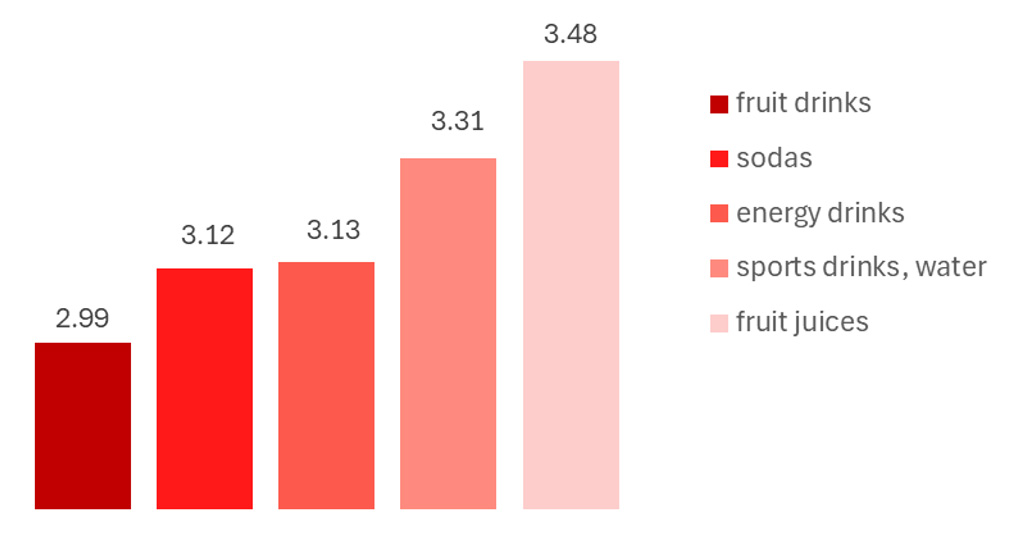
In in vitro testing (2015) of 380 beverages commercially available in the US, the pH was <4.0 for 93% of them, and <3.0 for almost three-quarters of the beverages.5Reddy A, Norris DF, Momeni SS et al. The pH of beverages in the United States. J Am Dent Assoc 2016;147(4):255-63. doi:10.1016/j.adaj.2015.10.019. The results for sodas, fruit juices, fruit drinks, energy drinks, and sports drinks and bottled waters combined (including flavored and vitamin waters), respectively, were an average pH of 3.12 (range 2.32 to 5.24), 3.48 (range 2.25 to 4.69), 2.99 (range 2.43 to 3.87), 3.13, and 3.31 (range 2.67 to 7.40), and the range for iced teas was pH 2.94 to 4.86. (Figure 1) In another analysis of commercially-available energy and sports drinks (n=67), an average pH of 3.3 (range pH 2.4 to 3.9) and pH 4.5 (range pH 3.1 to 6.8) was found, respectively.28Martínez LM, Lietz LL, Tarín CC et al. Analysis of the pH levels in energy and pre-workout beverages and frequency of consumption: a cross-sectional study. BMC Oral Health 2024;24(1):1082. doi:10.1186/s12903-024-04843-0. In addition, in recent in vitro studies of several commercially-available kombuchas, which are functional beverages consumed for their potential health benefits, the pH ranged from 2.82 to 3.66.29Lind E, Mähönen H, Latonen R-M et al. Erosive potential of ice tea beverages and kombuchas. Acta Odontologica Scandinavica 2023;81(6):491-8. doi:10.1080/00016357.2023.2199848.,30Pierce S, Amini A, Tantbirojn D et al. Millennial drinks: acidity, fluoride content, and enamel softening. Gen Dent 2023;71(4):36-43.
Bottled water is generally considered a healthy option, however, the pH varies substantially. In a Portuguese study (2022), the pHs of carbonated bottled waters (n=32) and still bottled waters (n=73) were compared.31Morgado M, Ascenso C, Carmo J et al. PH Analysis of Still and Carbonated Bottled Water: Potential Influence on Dental Erosion. Clin Exp Dent Res 2022;8:552-60. For 30 of 32 carbonated waters the pH ranged from 5.2 to 6.8, with two outliers. In contrast, for 31 still bottled waters a pH > 6.8 was found, a further 37 ranged from pH 5.5 and 6.8, and only 5 were <pH 5.5. (Figure 2) In an Australian study, approximately 75% of bottled waters (n=42) were erosive for enamel and 80% for dentin, including some spring and artesian waters.32Schmidt J, Huang B. The pH of bottled water commercially available in Australia and its implications for oral health. J Water Health 2022;20(5):871-6. doi: 10.2166/wh.2022.070. The most acidic were sparkling waters and flavored waters, with pHs ranging from 2.62 to 5.14 and 3.03 to 3.44, respectively. In another study, pHs ranging from 4.96 to 6.11 were observed for 4 commercial unflavored waters (two carbonated).5Reddy A, Norris DF, Momeni SS et al. The pH of beverages in the United States. J Am Dent Assoc 2016;147(4):255-63. doi:10.1016/j.adaj.2015.10.019.
Figure 2. Average surface roughness (Ra) of enamel samples following immersion in beverages.
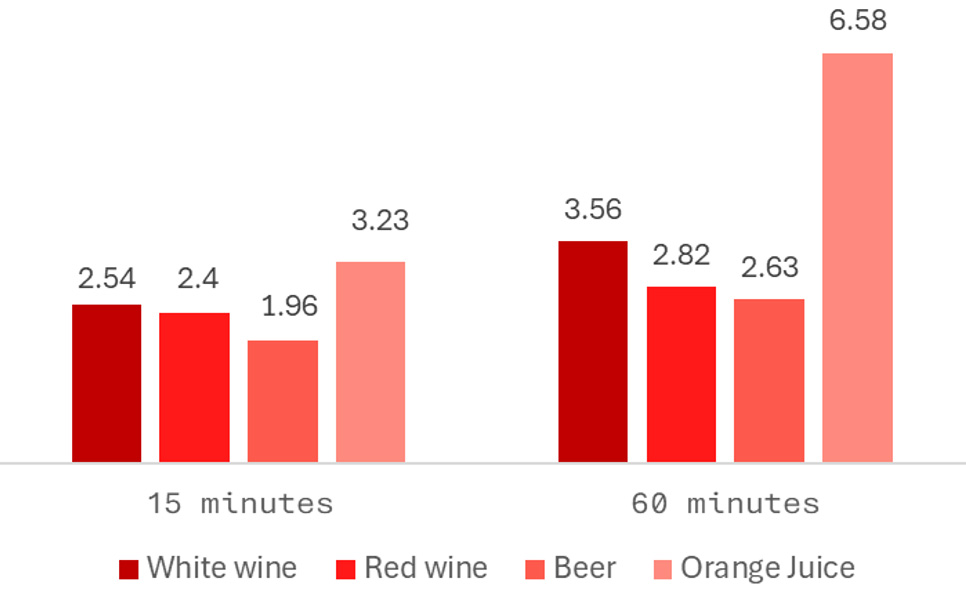
With respect to alcoholic beverages, in one in vitro study white wine, red wine and beer had an average pH of 3.02, 3.49 and 3.96, respectively.21Barac R, Gašić J, Popović J et al. In vitro effect of beer, red and white wine on the morphology and surface roughness of human enamel. Adv Clin Exp Med 2023;32(11):1241-8. doi:10.17219/acem/161856. Other studies offer similar findings, with specific beers having a pH of 4.1 to 4.4, and white and red wines, respectively, a pH of 3.64 and 3.99.33Lussi A, Megert B, Shellis RP. The erosive effect of various drinks, foods, stimulants, medications and mouthwashes on human tooth enamel. Swiss Dent J 2023;133(7-8):440-55. doi:10.61872/sdj-2023-07-08-01.,34Lan Z, Zhao IS, Li J et al. Erosive effects of commercially available alcoholic beverages on enamel. Dent Mater J 2023;42(2):236-40. doi:10.4012/dmj.2022-155. In studies, researchers have observed increases in surface roughness and mineral loss for human and bovine enamel and dentin samples with immersion in low-pH beverages, including with cyclic immersion with beverages and artificial/whole saliva. In one such study, unpolished human enamel samples were subjected daily to three cycles of immersion in white wine, red wine, beer or orange juice (positive control) for 15, 30 and 60 minutes, rinsed in distilled water, and then stored in artificial saliva.21Barac R, Gašić J, Popović J et al. In vitro effect of beer, red and white wine on the morphology and surface roughness of human enamel. Adv Clin Exp Med 2023;32(11):1241-8. doi:10.17219/acem/161856. Increases in samples’ surface roughness were observed at 15 minutes, and progressively greater at 30 and 60 minutes. The greatest average surface roughness resulted from immersion in orange juice, followed by white wine and the least for beer. (Figure 2)
Factors in dental erosion
The erosive potential of low-pH beverages is largely determined by their pH.5Reddy A, Norris DF, Momeni SS et al. The pH of beverages in the United States. J Am Dent Assoc 2016;147(4):255-63. doi:10.1016/j.adaj.2015.10.019.,33Lussi A, Megert B, Shellis RP. The erosive effect of various drinks, foods, stimulants, medications and mouthwashes on human tooth enamel. Swiss Dent J 2023;133(7-8):440-55. doi:10.61872/sdj-2023-07-08-01. However, other beverage factors also relate to the erosive potential of beverages and patient-related factors influence dental erosion in vivo.5Reddy A, Norris DF, Momeni SS et al. The pH of beverages in the United States. J Am Dent Assoc 2016;147(4):255-63. doi:10.1016/j.adaj.2015.10.019.,13Carvalho TS, Lussi A. Chapter 9: Acidic Beverages and Foods Associated with Dental Erosion and Erosive Tooth Wear. Monogr Oral Sci. 2020;28:91-98. doi:10.1159/000455376.,15Carvalho TS, Niemeyer SH, Young A, Lussi A. Factors Related to Erosive Tooth Wear throughout a Lifetime. Monogr Oral Sci 2025;33:149-77. doi:10.1159/000543570.,17Nijakowski K, Walerczyk-Sas A, Surdacka A. Regular Physical Activity as a Potential Risk Factor for Erosive Lesions in Adolescents. Int J Environ Res Public Health 2020;17(9):3002. doi:10.3390/ijerph17093002.,33Lussi A, Megert B, Shellis RP. The erosive effect of various drinks, foods, stimulants, medications and mouthwashes on human tooth enamel. Swiss Dent J 2023;133(7-8):440-55. doi:10.61872/sdj-2023-07-08-01.,35Lussi A, Carvalho TS. Erosive tooth wear: A multifactorial condition of growing concern and increasing knowledge. Monogr Oral Sci 2014;25:1-15. doi:10.1159/000360380.,36Carvalho TS, Pham KN, Niemeyer SH, Baumann T. The effect of red wine in modifying the salivary pellicle and modulating dental erosion kinetics. Eur J Oral Sci 2021;129(1):e12749. doi:10.1111/eos.12749.,37Lussi A, Jaeggi T. Erosion-Diagnosis and Risk Factors. Clin Oral Investig 2008;12(Suppl 1):S5-S13.,38Buzalaf MA, Hannas AR, Kato MT. Saliva and dental erosion. J Appl Oral Sci 2012;20:493-502.
Beverage factors
Other factors include the types of acid involved, how saturated the solution adjacent to the tooth is, its buffering capacity, and the presence/absence of protective factors.5Reddy A, Norris DF, Momeni SS et al. The pH of beverages in the United States. J Am Dent Assoc 2016;147(4):255-63. doi:10.1016/j.adaj.2015.10.019.,13Carvalho TS, Lussi A. Chapter 9: Acidic Beverages and Foods Associated with Dental Erosion and Erosive Tooth Wear. Monogr Oral Sci. 2020;28:91-98. doi:10.1159/000455376.,33Lussi A, Megert B, Shellis RP. The erosive effect of various drinks, foods, stimulants, medications and mouthwashes on human tooth enamel. Swiss Dent J 2023;133(7-8):440-55. doi:10.61872/sdj-2023-07-08-01. In one in vitro study assessing types of acids, the surface roughness of enamel samples was greater following 60-second immersion in phosphoric, lactic and ascorbic acids compared to tartaric, malic and citric acids.39Beyer M, Reichert J, Bossert J et al. Acids with an equivalent taste lead to different erosion of human dental enamel. Dent Mater 2011;27(10):1017-23. doi:10.1016/j.dental.2011.07.001. Regarding saturation, solutions containing high levels of calcium and phosphate can impede erosion at a low pH while, in contrast, solutions with lower concentrations calcium and phosphate not only do not impede erosion at a low pH but allow for erosion at relatively higher acidic pHs.21Barac R, Gašić J, Popović J et al. In vitro effect of beer, red and white wine on the morphology and surface roughness of human enamel. Adv Clin Exp Med 2023;32(11):1241-8. doi:10.17219/acem/161856.,33Lussi A, Megert B, Shellis RP. The erosive effect of various drinks, foods, stimulants, medications and mouthwashes on human tooth enamel. Swiss Dent J 2023;133(7-8):440-55. doi:10.61872/sdj-2023-07-08-01. Additionally, beverages containing acid with a high buffering capacity are better able to resist neutralization (retain a low pH), with increased risk for erosion.5Reddy A, Norris DF, Momeni SS et al. The pH of beverages in the United States. J Am Dent Assoc 2016;147(4):255-63. doi:10.1016/j.adaj.2015.10.019.,33Lussi A, Megert B, Shellis RP. The erosive effect of various drinks, foods, stimulants, medications and mouthwashes on human tooth enamel. Swiss Dent J 2023;133(7-8):440-55. doi:10.61872/sdj-2023-07-08-01. One measure of buffering capacity is the titratable acidity (TA), whereby the more NaOH at a given molarity necessary to raise the pH (to pH 7 or 5.5, depending on the study), the higher the TA, and indicating a greater potential for erosion.21Barac R, Gašić J, Popović J et al. In vitro effect of beer, red and white wine on the morphology and surface roughness of human enamel. Adv Clin Exp Med 2023;32(11):1241-8. doi:10.17219/acem/161856.,34Lan Z, Zhao IS, Li J et al. Erosive effects of commercially available alcoholic beverages on enamel. Dent Mater J 2023;42(2):236-40. doi:10.4012/dmj.2022-155.
Protective factors present in certain beverages include polyphenols, peptides/ proteins, calcium, casein, and fluoride.5Reddy A, Norris DF, Momeni SS et al. The pH of beverages in the United States. J Am Dent Assoc 2016;147(4):255-63. doi:10.1016/j.adaj.2015.10.019.,21Barac R, Gašić J, Popović J et al. In vitro effect of beer, red and white wine on the morphology and surface roughness of human enamel. Adv Clin Exp Med 2023;32(11):1241-8. doi:10.17219/acem/161856.,36Carvalho TS, Pham KN, Niemeyer SH, Baumann T. The effect of red wine in modifying the salivary pellicle and modulating dental erosion kinetics. Eur J Oral Sci 2021;129(1):e12749. doi:10.1111/eos.12749.,33Lussi A, Megert B, Shellis RP. The erosive effect of various drinks, foods, stimulants, medications and mouthwashes on human tooth enamel. Swiss Dent J 2023;133(7-8):440-55. doi:10.61872/sdj-2023-07-08-01. A large number of polyphenols are present in red wine and interact with salivary proteins, creating substances that stick to the acquired pellicle. This would increase the pellicle’s thickness and is held to partly explain the lower erosive potential of red wine compared to white wine.21Barac R, Gašić J, Popović J et al. In vitro effect of beer, red and white wine on the morphology and surface roughness of human enamel. Adv Clin Exp Med 2023;32(11):1241-8. doi:10.17219/acem/161856.,36Carvalho TS, Pham KN, Niemeyer SH, Baumann T. The effect of red wine in modifying the salivary pellicle and modulating dental erosion kinetics. Eur J Oral Sci 2021;129(1):e12749. doi:10.1111/eos.12749. In one in vitro study, the presence of a laboratory-acquired enamel pellicle reduced the loss of surface hardness as a result of immersion in red wine, as well as orange juice, apple juice, and citric acid compared to a standard in vitro test without an acquired pellicle.36Carvalho TS, Pham KN, Niemeyer SH, Baumann T. The effect of red wine in modifying the salivary pellicle and modulating dental erosion kinetics. Eur J Oral Sci 2021;129(1):e12749. doi:10.1111/eos.12749. In addition, it is believed that peptides/proteins contained in beer (approximately pH4) protect against erosion either through adsorption or alterations to the pellicle.33Lussi A, Megert B, Shellis RP. The erosive effect of various drinks, foods, stimulants, medications and mouthwashes on human tooth enamel. Swiss Dent J 2023;133(7-8):440-55. doi:10.61872/sdj-2023-07-08-01. Beers also contain polyphenols.40Brewing Forward. Phenolic compounds. https://brewingforward.com/wiki/Phenolic_compounds. Lastly, beverages containing calcium demonstrate a reduced erosive potential; for example, calcium added to orange juice, or casein or calcium in certain energy and sports drinks.33Lussi A, Megert B, Shellis RP. The erosive effect of various drinks, foods, stimulants, medications and mouthwashes on human tooth enamel. Swiss Dent J 2023;133(7-8):440-55. doi:10.61872/sdj-2023-07-08-01. In addition, in an in vitro study with fermented milk as the low-pH beverage, a low concentration of calcium and daily use of a low concentration fluoride mitigated reductions in surface microhardness and surface roughness.41Kim KH, Choi CH, Chung KH. Prevention of Dental Erosion Caused by Fermented Milk: An In-vitro Study. Oral Health Prev Dent 2022;20:401-12. doi: 10.3290/j.ohpd.b3556031. (Table 2)
| Table 2. Beverage-related factors in dental erosion |
|---|
| Types of acid |
| Degree of saturation of the solution |
| Buffering capacity |
| Protective factors |
Patient-related factors
Whether or not dental erosion occurs, and to what extent, is influenced by patient-related factors, including overall dietary habits, frequency and duration of consumption of low-pH beverages and foods, and dairy consumption. In addition, if low-pH beverages are retained in the mouth and swished around before swallowing this increases exposure compared to rapidly swallowing it (and drinking it through a straw).42O’Sullivan EA, Curzon ME. A Comparison of Acidic Dietary Factors in Children with and without Dental Erosion. ASDC J Dent Child 2000;67:160,186-92. Other factors include the acquired pellicle which is protective, as well as salivary flow and the quality of saliva (composition, pH and buffering capacity) which play a crucial role in buffering and remineralization.15Carvalho TS, Niemeyer SH, Young A, Lussi A. Factors Related to Erosive Tooth Wear throughout a Lifetime. Monogr Oral Sci 2025;33:149-77. doi:10.1159/000543570.,17Nijakowski K, Walerczyk-Sas A, Surdacka A. Regular Physical Activity as a Potential Risk Factor for Erosive Lesions in Adolescents. Int J Environ Res Public Health 2020;17(9):3002. doi:10.3390/ijerph17093002.,37Lussi A, Jaeggi T. Erosion-Diagnosis and Risk Factors. Clin Oral Investig 2008;12(Suppl 1):S5-S13.,38Buzalaf MA, Hannas AR, Kato MT. Saliva and dental erosion. J Appl Oral Sci 2012;20:493-502.,43Amerongen AV, Veerman EC. Saliva--the defender of the oral cavity. Oral Dis 2002;8(1):12-22. doi:10.1034/j.1601-0825.2002.1o816.x. As such, patients with dry mouth are at increased risk for dental erosion. An epigenetic component was also recently identified as a component of risk for erosive tooth wear in a study with almost 800 adolescents.44de Lavôr JR, Mendonça da Silva A, Søvik JB et al. Erosive Tooth Wear, Wine Intake, and Genetic Variation in COMT and MMP2. Caries Res 2025;59(1):22-34. doi:10.1159/000536333. Researchers in a recent systematic review concluded that the strongest protective factor was the pH of whole saliva.45Madariaga VI, Pereira-Cenci T, Walboomers XF, Loomans BAC. Association between Salivary Characteristics and Tooth Wear: A Systematic Review and Meta-Analysis. J Dent 2023;138:104692. (Table 3)
| Table 3. Patient-related factors in dental erosion | |
|---|---|
| Dietary intake (low pH) |
Frequency, duration of consumption Dairy consumption |
| Beverage habits |
Use of a straw Rapidity of swallowing Swishing |
| Intraoral environment |
Acquired pellicle Salivary flow Salivary composition Salivary pH and buffering capacity |
| Systemic factors |
Presence of conditions and medications causing dry mouth, medications Epigenetic component |
Other health considerations
Some beverage ingredients are risk factors for other oral and systemic issues. Added sugars in beverages such as sodas, iced teas, fruit drinks, and kombuchas, contribute to increased risk for dental caries.46Pitts NB, Zero DT, Marsh PD et al. Dental caries. Nat Rev Dis Primers 2017;25(3):17030. Together with other calorific dietary components of excessive calorie intake, they also contribute to overweight/obesity which in turn is associated with increased risk for diabetes mellitus and cardiovascular disease.47Scherer PE, Hill JA. Obesity, Diabetes, and Cardiovascular Diseases: A Compendium. Circ Res 2016;118(11):1703-5. doi:10.1161/CIRCRESAHA.116.308999. Alcoholic drinks also contain added sugars; wines contain from 1 to 100 grams/liter, i.e., up to 15 gm/5 fl oz (equivalent to 3.75 level teaspoons), and beer contains 0.5 to 5 grams for a 12-ounce glassful.48The Drink’s Project. Does Wine or Beer Have More Sugar: Understanding the Sweetness in Your Favorite Drinks. https://thedrinksproject.com/does-wine-or-beer-have-more-sugar/. ,49Chef’s Resource. How many ml in a glass of wine? https://www.chefsresource.com/faq/how-many-ml-glass-of-wine/. Other oral health risks associated with alcohol use include a greater risk for periodontal disease, and oral cancer (in particular in combination with tobacco use).50Wang JT, Lv J, Wang WC, Jiang XB. Alcohol consumption and risk of periodontitis: A meta-analysis. J Clin Periodontol 2016;43:572-83.,51Hamdi Z, Detzen L, Fessi S et al. Alcoholic beverage consumption, smoking habits, and periodontitis: A cross-sectional investigation of the NutriNet-Sante study. J Periodontol 2021;92:727-37.,52Genco RJ, Borgnakke WS. Risk factors for periodontal disease. Periodontol 2000 2013;62:59-94.,53O’Grady I, Anderson A, O’Sullivan J. The interplay of the oral microbiome and alcohol consumption in oral squamous cell carcinomas. Oral Oncol 2020;110:105011.
Energy drinks are used to increase alertness and energy levels, typically contain high levels of caffeine (>150 mg/liter) and may also contain high levels of sugars.54Reissig CJ, Strain EC, Griffiths RR. Caffeinated energy drinks - a growing problem. Drug Alcohol Depend 2009;99(1-3):1-10.,55Visram S, Cheetham M, Riby DM et al. Consumption of energy drinks by children and young people: a rapid review examining evidence of physical effects and consumer attitudes. BMJ Open 2016;6:e010380. doi:10.1136/bmjopen-2015-010380.,56Harvard T.H. Chan School of Public Health. The Nutrition Source. Energy Drinks. https://nutritionsource.hsph.harvard.edu/energy-drinks/. Other ingredients may include the herb ginseng, guarana, taurine (an amino acid), vitamin B, L-carnitine and L-tartarate.54Reissig CJ, Strain EC, Griffiths RR. Caffeinated energy drinks - a growing problem. Drug Alcohol Depend 2009;99(1-3):1-10.,55Visram S, Cheetham M, Riby DM et al. Consumption of energy drinks by children and young people: a rapid review examining evidence of physical effects and consumer attitudes. BMJ Open 2016;6:e010380. doi:10.1136/bmjopen-2015-010380.,56Harvard T.H. Chan School of Public Health. The Nutrition Source. Energy Drinks. https://nutritionsource.hsph.harvard.edu/energy-drinks/. Reported systemic health effects include hyperactivity, insomnia, headaches, hypertension, other adverse cardiovascular impacts, and stomach irritation.54Reissig CJ, Strain EC, Griffiths RR. Caffeinated energy drinks - a growing problem. Drug Alcohol Depend 2009;99(1-3):1-10.,57Al-Shaar L, Vercammen K, Lu C et al. Health Effects and Public Health Concerns of Energy Drink Consumption in the United States: A Mini-Review. Front Public Health 2017;5:225. Furthermore, among youth, a strong association has been found for energy drink consumption, risk behaviors and poor mental health.54Reissig CJ, Strain EC, Griffiths RR. Caffeinated energy drinks - a growing problem. Drug Alcohol Depend 2009;99(1-3):1-10.,58Pound CM, Blair B; Canadian Paediatric Society, Nutrition and Gastroenterology Committee, Ottawa, Ontario. Energy and sports drinks in children and adolescents. Paediatr Child Health 2017;22(7):406-10.,59De Sanctis V, Soliman N, Soliman AT et al. Caffeinated energy drink consumption among adolescents and potential health consequences associated with their use: a significant public health hazard. Acta Biomed 2017;88(2):222-31.,60Van Batenburg-Eddes T, Lee NC, Weeda WD et al. The potential adverse effect of energy drinks on executive functions in early adolescence. Front Psychol 2014;5:457.,61Marinoni M, Parpinel M, Gasparini A et al. Risky behaviors, substance use, and other lifestyle correlates of energy drink consumption in children and adolescents: a systematic review. Eur J Pediatr 2022;181(4):1307-19. doi:10.1007/s00431-021-04322-6.
Conclusions
Low-pH beverages are a common source of dietary acids and are associated with dental erosion in youth and adults, including a wide array of beverages such as sodas, energy drinks, alcoholic drinks, and fruit juices, as well as many bottled waters. However, dental erosion is a complex condition with other contributing factors that increase risk or help protect against dental erosion. In addition, some low-pH beverages contain ingredients that place individuals at increased risk for other oral conditions and systemic health issues. Furthermore, researchers have recommended further research using standardized designs and variables to provide definitive evidence on the role of low-pH beverages and dental erosion; existing studies are heterogeneous with substantial differences in sample sizes, study design, and the use of differing clinical indices.8Salas MM, Nascimento GG, Huysmans MC, Demarco FF. Estimated prevalence of erosive tooth wear in permanent teeth of children and adolescents: an epidemiological systematic review and meta-regression analysis. J Dent 2015;43(1):42-50. doi:10.1016/j.jdent.2014.10.012.,24Gálvez-Bravo F, Edwards-Toro F, Contador-Cotroneo R et al. Erosive Potential of Sports, Energy Drinks, and Isotonic Solutions on Athletes’ Teeth: A Systematic Review. Nutrients 2025;17:403. https://doi.org/10.3390/nu17030403.
In the meantime, dental professionals can educate patients during dental visits on the pH and sugar content of beverages, and on limiting consumption of low-pH beverages (and foods) to reduce risk for erosion, as well as other potential health impacts as indicated. At the same time, patients can be encouraged to instead opt for healthier beverages such as tap water, higher pH bottled waters, and milk as a source of calcium.
References
- 1.Schlueter N, Amaechi BT, Bartlett D et al. Terminology of erosive tooth wear: Consensus report of a workshop organized by the ORCA and the Cariology Research Group of the IADR. Caries Res 2020;54(1):2-6.
- 2.Bouqot JE, Seime RJ. Bulimia nervosa: dental perspectives. Pract Periodontol Aesth Dent 1997;9(6):655-63.
- 3.Moazzez R, Bartlett D, Anggiansah A. Dental erosion, gastro-esophageal reflux disease and saliva: how are they related? J Dent 2004;32(6):489-94.
- 4.Dallavilla GG, da Silva Martins D, Peralta-Mamani M et al. Prevalence of erosive tooth wear in risk group patients: systematic review. Clin Oral Investig 2024;28(11):588. doi:10.1007/s00784-024-05963-1.
- 5.Reddy A, Norris DF, Momeni SS et al. The pH of beverages in the United States. J Am Dent Assoc 2016;147(4):255-63. doi:10.1016/j.adaj.2015.10.019.
- 6.Liu XX, Tenenbaum HC, Wilder RS et al. Pathogenesis, diagnosis and management of dentin hypersensitivity: an evidence-based overview for dental practitioners. BMC Oral Health 2020;20(1):220. doi:10.1186/s12903-020-01199-z.
- 7.Taji S, Seow WK. A literature review of dental erosion in children. Aust Dent J 2010;55(4):358-67. doi:10.1111/j.1834-7819.2010.01255.x
- 8.Salas MM, Nascimento GG, Huysmans MC, Demarco FF. Estimated prevalence of erosive tooth wear in permanent teeth of children and adolescents: an epidemiological systematic review and meta-regression analysis. J Dent 2015;43(1):42-50. doi:10.1016/j.jdent.2014.10.012.
- 9.Schlueter N, Mulic A, Luka B. Global Prevalence of Erosive Tooth Wear. Monogr Oral Sci 2025;33:45-71. doi:10.1159/000543785.
- 10.Methuen M, Kangasmaa H, Alaraudanjoki VK et al. Prevalence of Erosive Tooth Wear and Associated Dietary Factors among a Group of Finnish Adolescents. Caries Res 2022;56(5-6):477-87. doi:10.1159/000527305.
- 11.Meléndez C, Marró ML, Ramírez V et al. Prevalence and related risk factors of erosive tooth wear in Chilean schoolchildren. A cross-sectional study. Eur Arch Paediatr Dent 2025. doi:10.1007/s40368-025-01065-y.
- 12.Jiménez-Núñez JC, González-Aragón Pineda ÁE, Villanueva-Gutiérrez T et al. Erosive Tooth Wear and Associated Risk Indicators in Schoolchildren from Rural and Urban Areas of the State of Mexico: A Cross-Sectional Study. Children 2024;11:1090. https://doi.org/10.3390/children11091090.
- 13.Carvalho TS, Lussi A. Chapter 9: Acidic Beverages and Foods Associated with Dental Erosion and Erosive Tooth Wear. Monogr Oral Sci. 2020;28:91-98. doi:10.1159/000455376.
- 14.Samec TU, Jan J. Predisposing Factors for Erosive Tooth Wear in Permanent Teeth Among Asthmatic Children and Adolescents. Clin Exp Dent Res 2025;11(3):e70142. doi:10.1002/cre2.70142.
- 15.Carvalho TS, Niemeyer SH, Young A, Lussi A. Factors Related to Erosive Tooth Wear throughout a Lifetime. Monogr Oral Sci 2025;33:149-77. doi:10.1159/000543570.
- 16.Oudkerk J, Grenade C, Davarpanah A et al. Risk factors of tooth wear in permanent dentition: A scoping review. J Oral Rehabil 2023;50(10):1110-65. doi:10.1111/joor.13489.
- 17.Nijakowski K, Walerczyk-Sas A, Surdacka A. Regular Physical Activity as a Potential Risk Factor for Erosive Lesions in Adolescents. Int J Environ Res Public Health 2020;17(9):3002. doi:10.3390/ijerph17093002.
- 18.Fairchild R, Setarehnejad A. Erosive potential of commonly available vapes: a cause for concern? Br Dent J 2021;231(8):487-91. doi:10.1038/s41415-021-3563-1.
- 19.Salas MM, Nascimento GG, Vargas-Ferreira F et al. Diet influenced tooth erosion prevalence in children and adolescents: Results of a meta-analysis and meta-regression. J Dent 2015;43(8):865-75. doi:10.1016/j.jdent.2015.05.012.
- 20.Shellis RP, Featherstone JDB, Lussi A. Understanding the chemistry of dental erosion. Monogr Oral Sci 2014;25:163-79. doi:10.1159/000359943
- 21.Barac R, Gašić J, Popović J et al. In vitro effect of beer, red and white wine on the morphology and surface roughness of human enamel. Adv Clin Exp Med 2023;32(11):1241-8. doi:10.17219/acem/161856.
- 22.Ruiz DC, Marqués Martínez L, García Miralles E. Dental Erosion and Diet in Young Children and Adolescents: A Systematic Review. Appl Sci 2023;13:3519.
- 23.Lussi A, Schaffner M. Progression of and Risk Factors for Dental Erosion and Wedge-Shaped Defects over a 6-Year Period. Caries Res 2000;34:182-7.
- 24.Gálvez-Bravo F, Edwards-Toro F, Contador-Cotroneo R et al. Erosive Potential of Sports, Energy Drinks, and Isotonic Solutions on Athletes’ Teeth: A Systematic Review. Nutrients 2025;17:403. https://doi.org/10.3390/nu17030403.
- 25.Silva M-RG, Chetti M-A, Neves H, Manso M-C, Is the consumption of beverages and food associated to dental erosion? A cross-sectional study in Portuguese athletes. Science & Sports 2021;36(6):477.e1-477.e11. https://doi.org/10.1016/j.scispo.2020.12.004.
- 26.Mathew T, Casamassimo PS, Hayes JR. Relationship between sports drinks and dental erosion in 304 university athletes in Columbus, Ohio, USA. Caries Res 2002;36(4):281-7. doi:10.1159/000063927.
- 27.Needleman I, Ashley P, Meehan L et al. Poor Oral Health Including Active Caries in 187 UK Professional Male Football Players: Clinical Dental Examination Performed by Dentists. Br J Sports Med 2016;50:41-4.
- 28.Martínez LM, Lietz LL, Tarín CC et al. Analysis of the pH levels in energy and pre-workout beverages and frequency of consumption: a cross-sectional study. BMC Oral Health 2024;24(1):1082. doi:10.1186/s12903-024-04843-0.
- 29.Lind E, Mähönen H, Latonen R-M et al. Erosive potential of ice tea beverages and kombuchas. Acta Odontologica Scandinavica 2023;81(6):491-8. doi:10.1080/00016357.2023.2199848.
- 30.Pierce S, Amini A, Tantbirojn D et al. Millennial drinks: acidity, fluoride content, and enamel softening. Gen Dent 2023;71(4):36-43.
- 31.Morgado M, Ascenso C, Carmo J et al. PH Analysis of Still and Carbonated Bottled Water: Potential Influence on Dental Erosion. Clin Exp Dent Res 2022;8:552-60.
- 32.Schmidt J, Huang B. The pH of bottled water commercially available in Australia and its implications for oral health. J Water Health 2022;20(5):871-6. doi: 10.2166/wh.2022.070.
- 33.Lussi A, Megert B, Shellis RP. The erosive effect of various drinks, foods, stimulants, medications and mouthwashes on human tooth enamel. Swiss Dent J 2023;133(7-8):440-55. doi:10.61872/sdj-2023-07-08-01.
- 34.Lan Z, Zhao IS, Li J et al. Erosive effects of commercially available alcoholic beverages on enamel. Dent Mater J 2023;42(2):236-40. doi:10.4012/dmj.2022-155.
- 35.Lussi A, Carvalho TS. Erosive tooth wear: A multifactorial condition of growing concern and increasing knowledge. Monogr Oral Sci 2014;25:1-15. doi:10.1159/000360380.
- 36.Carvalho TS, Pham KN, Niemeyer SH, Baumann T. The effect of red wine in modifying the salivary pellicle and modulating dental erosion kinetics. Eur J Oral Sci 2021;129(1):e12749. doi:10.1111/eos.12749.
- 37.Lussi A, Jaeggi T. Erosion-Diagnosis and Risk Factors. Clin Oral Investig 2008;12(Suppl 1):S5-S13.
- 38.Buzalaf MA, Hannas AR, Kato MT. Saliva and dental erosion. J Appl Oral Sci 2012;20:493-502.
- 39.Beyer M, Reichert J, Bossert J et al. Acids with an equivalent taste lead to different erosion of human dental enamel. Dent Mater 2011;27(10):1017-23. doi:10.1016/j.dental.2011.07.001.
- 40.Brewing Forward. Phenolic compounds. https://brewingforward.com/wiki/Phenolic_compounds.
- 41.Kim KH, Choi CH, Chung KH. Prevention of Dental Erosion Caused by Fermented Milk: An In-vitro Study. Oral Health Prev Dent 2022;20:401-12. doi: 10.3290/j.ohpd.b3556031.
- 42.O’Sullivan EA, Curzon ME. A Comparison of Acidic Dietary Factors in Children with and without Dental Erosion. ASDC J Dent Child 2000;67:160,186-92.
- 43.Amerongen AV, Veerman EC. Saliva–the defender of the oral cavity. Oral Dis 2002;8(1):12-22. doi:10.1034/j.1601-0825.2002.1o816.x.
- 44.de Lavôr JR, Mendonça da Silva A, Søvik JB et al. Erosive Tooth Wear, Wine Intake, and Genetic Variation in COMT and MMP2. Caries Res 2025;59(1):22-34. doi:10.1159/000536333.
- 45.Madariaga VI, Pereira-Cenci T, Walboomers XF, Loomans BAC. Association between Salivary Characteristics and Tooth Wear: A Systematic Review and Meta-Analysis. J Dent 2023;138:104692.
- 46.Pitts NB, Zero DT, Marsh PD et al. Dental caries. Nat Rev Dis Primers 2017;25(3):17030.
- 47.Scherer PE, Hill JA. Obesity, Diabetes, and Cardiovascular Diseases: A Compendium. Circ Res 2016;118(11):1703-5. doi:10.1161/CIRCRESAHA.116.308999.
- 48.The Drink’s Project. Does Wine or Beer Have More Sugar: Understanding the Sweetness in Your Favorite Drinks. https://thedrinksproject.com/does-wine-or-beer-have-more-sugar/.
- 49.Chef’s Resource. How many ml in a glass of wine? https://www.chefsresource.com/faq/how-many-ml-glass-of-wine/.
- 50.Wang JT, Lv J, Wang WC, Jiang XB. Alcohol consumption and risk of periodontitis: A meta-analysis. J Clin Periodontol 2016;43:572-83.
- 51.Hamdi Z, Detzen L, Fessi S et al. Alcoholic beverage consumption, smoking habits, and periodontitis: A cross-sectional investigation of the NutriNet-Sante study. J Periodontol 2021;92:727-37.
- 52.Genco RJ, Borgnakke WS. Risk factors for periodontal disease. Periodontol 2000 2013;62:59-94.
- 53.O’Grady I, Anderson A, O’Sullivan J. The interplay of the oral microbiome and alcohol consumption in oral squamous cell carcinomas. Oral Oncol 2020;110:105011.
- 54.Reissig CJ, Strain EC, Griffiths RR. Caffeinated energy drinks – a growing problem. Drug Alcohol Depend 2009;99(1-3):1-10.
- 55.Visram S, Cheetham M, Riby DM et al. Consumption of energy drinks by children and young people: a rapid review examining evidence of physical effects and consumer attitudes. BMJ Open 2016;6:e010380. doi:10.1136/bmjopen-2015-010380.
- 56.Harvard T.H. Chan School of Public Health. The Nutrition Source. Energy Drinks. https://nutritionsource.hsph.harvard.edu/energy-drinks/.
- 57.Al-Shaar L, Vercammen K, Lu C et al. Health Effects and Public Health Concerns of Energy Drink Consumption in the United States: A Mini-Review. Front Public Health 2017;5:225.
- 58.Pound CM, Blair B; Canadian Paediatric Society, Nutrition and Gastroenterology Committee, Ottawa, Ontario. Energy and sports drinks in children and adolescents. Paediatr Child Health 2017;22(7):406-10.
- 59.De Sanctis V, Soliman N, Soliman AT et al. Caffeinated energy drink consumption among adolescents and potential health consequences associated with their use: a significant public health hazard. Acta Biomed 2017;88(2):222-31.
- 60.Van Batenburg-Eddes T, Lee NC, Weeda WD et al. The potential adverse effect of energy drinks on executive functions in early adolescence. Front Psychol 2014;5:457.
- 61.Marinoni M, Parpinel M, Gasparini A et al. Risky behaviors, substance use, and other lifestyle correlates of energy drink consumption in children and adolescents: a systematic review. Eur J Pediatr 2022;181(4):1307-19. doi:10.1007/s00431-021-04322-6.